
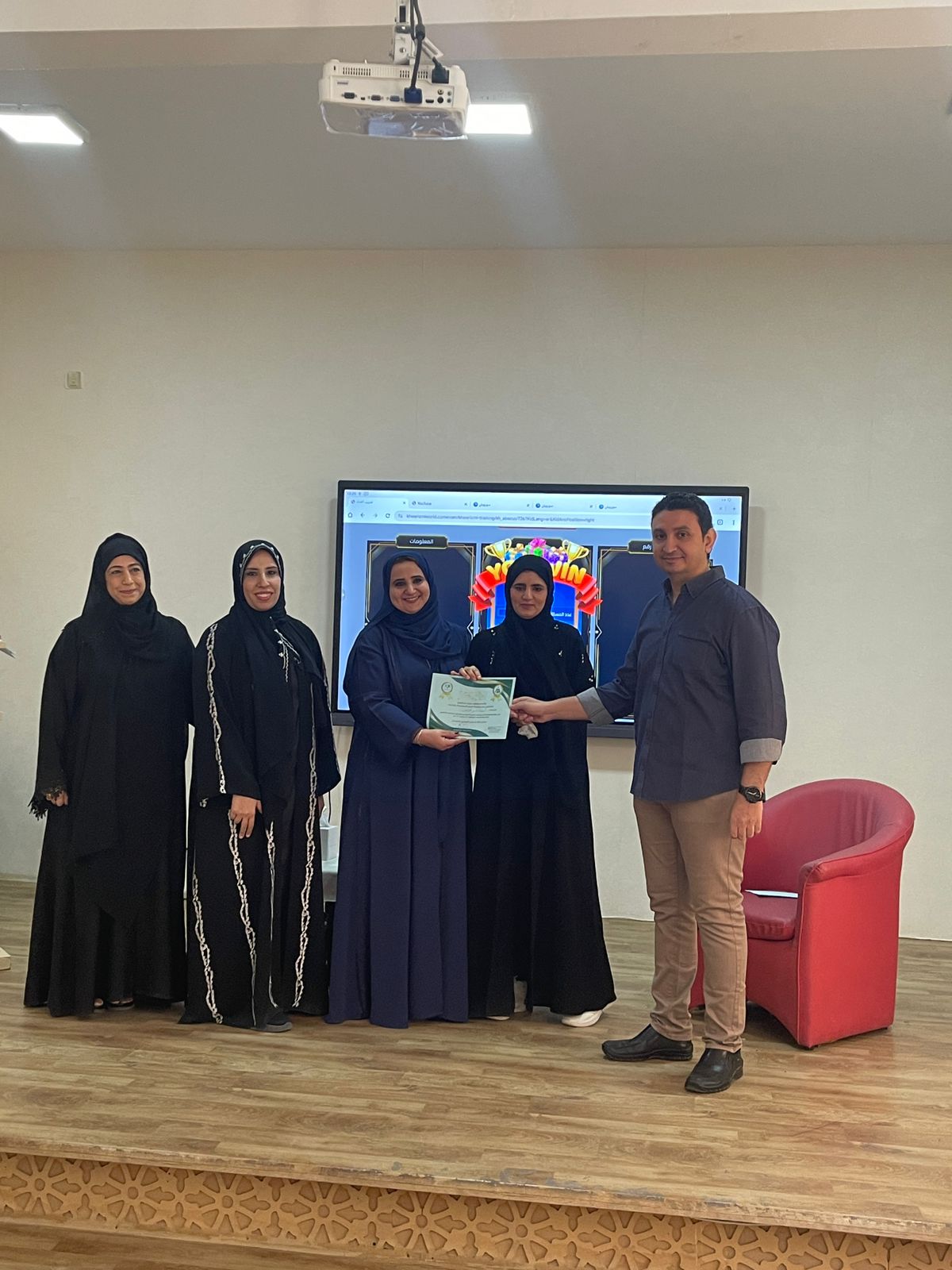
As part of its commitment to enhancing mental arithmetic skills, Al-Faydh Al-Ma'rifa School in Oman hosted a special training event led by Dr. Mohamed Al-Rifai, an expert in mental arithmetic and director of the Al-Khwarizmi World Platform. The event included comprehensive training sessions for teachers and students on effectively utilizing the platform, showcasing the school's dedication to adopting modern educational tools.
The Al-Khwarizmi World Platform extends its sincere gratitude to Ms. Amal Al-Ma’amari, the school principal, for her exceptional cooperation and invaluable support in making this event a success. We are delighted to announce that Al-Faydh Al-Ma'rifa School will officially implement the platform as a core tool for training its students in mental arithmetic, equipping them with advanced cognitive skills and preparing them for outstanding achievements.
View Album
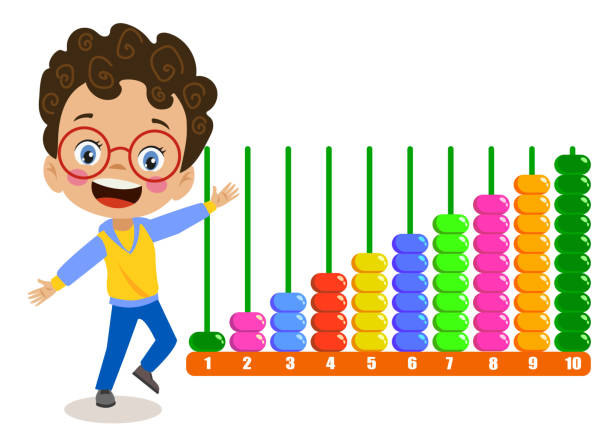
In today's fast-moving world, many people are looking for career opportunities that combine teaching with personal growth, especially in the field of developing children's skills. If you are interested in becoming a UCMAS trainer, you are on the right track. UCMAS is an educational programme built around mental arithmetic using the abacus, and it helps children build strong mental skills. But the common question is: how do you become a UCMAS trainer? In this guide we will walk through everything you need in order to understand the training process, the required skills, and the practical steps, with a focus on how to get the most out of this opportunity. Whether you are already a teacher or looking for a career change, we will answer your key questions: what are the basic requirements, how do you choose the right course, and what are the day-to-day benefits for you as a trainer.
Before going into the details of the training, let us understand exactly what UCMAS is. UCMAS is an international educational programme that relies on the traditional abacus to teach children mental arithmetic. The programme starts at an early age, where students learn how to carry out complex calculations without any external tools, which strengthens focus, memory and quick thinking. The programme is not simply maths lessons; it is a tool for developing the brain as a whole, and it includes multiple stages that begin with the basics and reach advanced levels covering high-speed mental calculation and competitions.
Now, why does UCMAS need professional trainers? Because the success of the programme depends on the trainer's ability to pass on the knowledge in an enjoyable and effective way. Trainers are the link between the curriculum and the children, and they help build students' confidence as they learn. If you are asking yourself whether you can be an effective trainer, the answer lies in good training that focuses on understanding the curriculum deeply and applying it in practice. In Arab countries such as Egypt, Saudi Arabia and Sudan, the programme is widespread in educational centres, and there is continuous demand for well-trained instructors to meet the needs of families interested in developing their children.
If you are thinking about enrolling in a UCMAS trainer course, consider the benefits you will gain. First, you will acquire valuable personal skills such as improving your own mental arithmetic, which helps you in daily life and even in other tasks. As a trainer, you will learn how to work with children of different ages, which develops your communication skills and your patience. This programme opens doors to a variety of work opportunities, whether in official UCMAS centres or in your own projects, where you can offer private lessons or run workshops.
For those asking what sets a UCMAS trainer apart from others, the answer is the ability to see real change in students. Imagine helping a child who struggles with maths solve complex problems at remarkable speed - that achievement gives you a genuine sense of satisfaction. The programme also sometimes integrates elements of Indian Vedic maths, which broadens your knowledge of alternative teaching methods. If you are passionate about education, this training gives you the tools to become a multi-skilled trainer, able to work with different groups and adapt lessons to the needs of each student.
Not everyone can become a UCMAS trainer without preparation, but the core skills can be learned. First, you should have a background in mathematics - not necessarily a specialised university degree, but a good understanding of arithmetic operations. If you are asking whether you need a university certificate: in many cases yes, especially in official courses, where proof of identity and academic certificates are requested to ensure commitment. You should also be skilled at communication, because a trainer works with children who may be shy or need extra encouragement.
Among the key skills: the ability to use the abacus smoothly, since the training focuses on teaching you finger movement and fast calculation. You should also be patient and positive, because the programme relies on repetition and practice. If you are new, do not worry; the courses cover everything from scratch, including how to manage classes and assess student progress. In some courses you will learn to blend Indian Vedic techniques to make lessons more engaging. A common question is whether you can train online. Yes, there are online options in some countries, which makes the process more flexible for those working full time.
If you have decided to start, here are the practical steps for UCMAS trainer training. First, look for official centres or accredited academies in your country, such as those in Egypt, Saudi Arabia or Sudan. You can enquire about courses through official websites or social media pages. The next step is submitting your documents: academic certificates, a CV, and proof of identity.
The course usually begins with theoretical sessions explaining the philosophy of UCMAS and how the abacus works. It then moves to practical training, where you learn how to teach the different levels, from beginners to advanced. The course includes mental arithmetic exercises, how to prepare lessons, and how to manage time in class. At the end of the course you will take an exam or assessment to obtain a certificate accredited by the global UCMAS academy.
The question that always comes up: how long does the course take? It varies by programme, but it is usually intensive in order to cover every aspect. After certification you can begin teaching, whether at a centre or independently. If you are asking about the challenges: you may struggle at first with fast calculation, but daily practice turns it into a habit. It is also advisable to follow refresher courses to keep up with any developments in the curriculum.
After completing UCMAS trainer training, how do you ensure your success? First, focus on building a strong relationship with your students by making lessons enjoyable, for example by using games or challenges. If you are asking how to attract students, start by offering free trial sessions to showcase the benefits of the programme. Also, cooperate with local schools or centres to widen the scope of your work.
Among the important tips: keep developing yourself by watching training videos or joining trainer groups on social media. This helps you exchange experience and face challenges such as working with children who have learning difficulties. You should also be organised in following student progress, using simple sheets or applications to record achievements. If you are new, start with small groups to build your confidence gradually. A common question is whether you can combine UCMAS with other programmes. Yes, such as Vedic maths, which makes your lessons more varied and engaging.
Becoming a UCMAS trainer is not just a job; it is an opportunity to influence children's lives and to develop yourself. By understanding the programme, acquiring the skills and following the steps, you can achieve it easily. If you are ready, start by looking for courses near you and explore the registration options. You will find that this field is full of possibilities, and it will answer all your questions about how to begin and how to succeed. For more details, contact your local UCMAS centres or join trainer groups to exchange experience.
View Album
In today’s fast-paced world, mental arithmetic is gaining traction as a powerful tool to boost children’s cognitive skills, making the role of a mental arithmetic trainer more valuable than ever. If you’re wondering how to become a mental arithmetic trainer, this guide is for you. We’ll answer your key questions, like what skills are needed, how to enroll in a training program, and practical steps to succeed in this field. Whether you’re a teacher looking to expand your expertise or someone seeking a rewarding career change, this article is designed to provide actionable insights while addressing user intent for those searching for training opportunities. Our goal is to help you attract real leads and clients, particularly in regions like Saudi Arabia, Egypt, and Jordan, by leveraging platforms like Khwarizmi World for tailored support.
Training to become an abacus mental math instructor means equipping individuals to become professional instructors in teaching rapid calculation techniques without using external tools, such as an abacus or calculator. This includes programs like the UCMAS method or Vedic mathematics, where instructors learn how to effectively teach these skills to children. If you're wondering why you should choose this field, the answer lies in the fact that mental math isn't just about mathematics; it's a tool for developing focus, memory, and self-confidence in students. As an instructor, you'll be responsible for designing engaging lessons that help children solve complex problems quickly, making your work both inspiring and rewarding.
In Arab countries like Saudi Arabia, Egypt, and Jordan, this type of education is common in learning centers and schools, as parents seek instructors who can provide personalized training. Your preparation as a trainer begins with understanding the core methodologies, such as using the abacus in the USI Math program or mental arithmetic techniques in Vedic Math. This training prepares you to work within an organization or as an independent instructor, and equips you to answer common questions from parents, such as: "How do I choose a good tutor for my child?" Through your own training, you will be able to offer answers based on practical experience.
If you are considering enrolling in a math instructor training course, think about the benefits you will gain. First, you will enhance your own mental math skills, which can be useful in everyday life, such as for time management or efficient problem-solving. As a math instructor, you will learn how to work with diverse groups of children, including those who struggle with traditional math concepts, thus improving your communication and adaptability skills.
Yes, you can work in specialized educational centers, offer online tutoring, or even start your own business. This training also equips you to integrate different programs, such as the USI Math method with Vedic mathematics, making your services more appealing to clients. Imagine helping a student participate in mental math competitions—this achievement builds a strong reputation as a trainer and addresses parent inquiries about preparing their children for competitions through engaging and effective training methods.
To become a successful math tutor, you need some essential skills, which can be acquired through training. First, you should have a background in mathematics—not necessarily a specialized degree, but an understanding of basic operations like addition and subtraction. If you're wondering, "Do I need prior teaching experience?", the answer is not always. However, the ability to communicate clearly with children is crucial, as the program relies on repetition and encouragement.
Mastering mental math techniques, such as finger movements on an abacus (like in the Vedic Math method) or other mental calculation strategies. You also need patience and creativity to make lessons engaging, using games or challenges, for example. During training, you'll learn how to manage a class, assess student progress, and adapt lessons to different learning levels. If you're a complete beginner, the courses cover everything from scratch, including how to support students with additional needs. A common question is: Can I complete the training online? Yes, there are online options that offer flexibility, especially with platforms like Khwarizmi World, which supports ongoing professional development.
Here are the practical steps to becoming a certified abacus math instructorFirst, find accredited training programs in your area, such as those offered by programs like UCMAS or VEDHA in Saudi Arabia or Egypt. You can inquire about the requirements through their official websites or social media channels. The next step is to submit your documents, such as academic certificates and a resume, to demonstrate your commitment.
The training program begins with theoretical sessions explaining the philosophy of abacus math and its importance in brain development. Then, you move on to practical training, where you learn how to teach different levels, from basic to advanced calculations. The course will include exercises on lesson planning, using tools like the abacus, and tracking student progress using charts. At the end of the training, you will take an assessment to obtain a certification that qualifies you to teach.
If you're wondering about the challenges of the training: you might find it difficult to master the techniques initially, but regular practice will make them second nature. It's also recommended to choose a program that includes practical training with real students to gain experience. After certification, you can start teaching. Platforms like Al-Khwarizmi World offer additional tools, such as a teacher dashboard for tracking student progress, making your work easier.
After completing your training, how can you ensure your success as a mental math instructor? First, focus on making your lessons interactive by using games or flashcards to keep students engaged. If you're wondering how to attract clients, offer free trial sessions to demonstrate the program's benefits and collaborate with local schools or learning centers. Continuously develop your skills by attending refresher courses or joining instructor networks to share best practices.
Personalize lessons to suit each student's needs, such as adding extra exercises for advanced levels. If you encounter challenges, such as disengaged students, use motivational techniques like rewards or group challenges. Stay organized by tracking student progress using digital tools to record achievements. If you're considering integrating other programs, try combining USI Math with Vedic Math for a comprehensive learning experience. Platforms like Khwarizmi World can assist with this, offering customized packages that include FAQs and ongoing support.
Yossi Mas focuses on counters, while Veda focuses on direct mental techniques, but training can combine both to diversify skills.
Can anyone become a trainer?
Yes, if you have the desire and the basic background, and provide the required documentation for the courses.
Search for internationally accredited programs and read reviews from previous trainers on social media.
You can start teaching immediately, with support from the center to find job opportunities.
Yes, with real-life exercises for applying techniques and classroom management.
By adapting lessons and using motivational methods, the training also covers these points.
Yes, it helps reinforce traditional mathematics, and you can learn this during the training.
Becoming a mental math instructor is a stepping stone to an inspiring career, helping to cultivate a new generation of fast thinkers. By mastering the skills, following the steps, and applying the tips, you'll be well-prepared for success. If you're ready, start by searching for courses in your area and exploring training opportunities. For additional support, contact the Khwarizmi World platform through our website at https://www.khwarizmiworld.com/ to design a customized training package or to receive guidance on how to launch your career as a mental math instructor. This field is waiting for your contribution, so don't hesitate to take that first step.
View Album
In the modern world of education, many are looking for programs that enhance children's mental skills in an innovative way. Here, Abacus Math comes into play as a unique Egyptian invention in the field of emotional-cognitive mental arithmetic. If you're considering training to become an Abacus Math instructor, you're about to discover an inspiring career opportunity. This guide answers your key questions, such as the steps to becoming a certified instructor, essential skills, and practical methods for success in this field. Whether you're a teacher looking to enhance your expertise or someone seeking a new career path, we'll focus on the information that will help you make an informed decision. At the end of this article, you'll find an invitation to connect with specialized platforms like Khwarizmi World to receive personalized support for your training and to attract real clients.
The Board Math Trainer Training Program is a comprehensive training course designed to equip individuals with the skills and knowledge to become professional instructors in this innovative educational system. This system utilizes a special board to teach emotional and intuitive mental math. Developed by Dr. Ahmed El-Sharkawy, Board Math is not just a method of calculation, but a tool for unlocking children's mathematical potential through techniques that blend creativity and logic. The program progresses through stages, starting with the basics and advancing to complex problem-solving, enhancing focus and memory.
The answer lies in its ability to transform mathematics from a difficult subject into an enjoyable and rewarding experience. As a trainer, you'll be responsible for designing interactive lessons that help children discover their hidden abilities, making your work truly impactful. In Arab countries like Egypt, Saudi Arabia, and Jordan, this program is gaining popularity in educational centers, as parents seek qualified trainers who can offer personalized instruction. This training addresses questions parents often ask, such as: "How will the Board Math program help my child excel in math?" With this training, you'll be able to explain how the board simplifies mathematical operations, attracting more students and parents to your services.
If you're considering becoming a certified Board Math instructor, think about the personal and professional benefits you'll gain.
First, you'll enhance your mental math skills, helping you solve everyday problems more efficiently and boosting your confidence in mathematics. As an instructor, you'll learn to work with diverse children, including those who struggle with traditional learning methods, thus improving your communication skills and creativity in lesson planning.
Does this training open doors to many job opportunities? Yes, you can work at official Board Math centers, offer private tutoring, or conduct workshops in schools. The program also allows you to integrate other techniques, such as Vedic Math or the UCMAS method, making your services more diverse and appealing to clients. Imagine helping a child solve complex problems on the board effortlessly—this achievement builds a strong reputation, addressing parents' questions about preparing their children for math competitions through engaging and creative instruction. Platforms like Khwarizmi World support this by offering tailored packages to help you easily attract new clients.
To become a successful Math on the Board instructor, you need basic skills that can be acquired through training; a specialized background in advanced mathematics isn't essential. First, you should have a fundamental understanding of arithmetic operations like addition and multiplication, but the real focus is on the ability to demonstrate these concepts effectively using the whiteboard. If you're wondering, "Do I need prior teaching experience?", the answer is not necessarily. However, the ability to communicate clearly with children is crucial, as the program relies on encouragement and interaction to foster mathematical talent.
Mastering the use of the whiteboard for mental math, emphasizing smooth movements and a playful approach that makes learning enjoyable. You should also be creative, incorporating games and challenges into lessons, and patient, able to work with students of varying abilities. During training, you'll learn classroom management, how to assess progress through practical observation, and how to tailor lessons to each child's needs. If you're a beginner, the courses cover everything from the ground up, including how to support children who need extra help with concentration. A common question is: Can I teach online? Yes, there are flexible digital options, especially with platforms like Khwarizmi World, which offer ongoing training and tools for tracking progress, addressing concerns about accessibility and flexibility.
Here are the practical steps to complete the Board Method math trainer training program.
First, find an accredited training course offered by the program developer or an authorized training center in your region, such as those available in Egypt or Saudi Arabia. You can inquire through their official social media pages or dedicated websites to learn about the requirements. The next step is to submit your documents, such as academic certificates and a CV, to demonstrate your commitment to the program.
The course begins with theoretical sessions explaining the philosophy of the Board Method and how to use the board to foster cognitive skills. Then, it moves on to practical training, where you learn how to teach different levels, from basic concepts to advanced mental math techniques. The course will include exercises on lesson planning, using the board in interactive sessions, and monitoring student progress through daily observations. At the end of the training, you will undergo a practical assessment to obtain the international certification as a certified trainer, which qualifies you to teach officially.
What are the challenges of this training? You might initially find the sequence of calculations challenging, but regular practice will make it second nature. It's also recommended to choose a course that includes practical training with children to gain real-world experience. After certification, you can start working. Platforms like Khwarizmi World offer additional tools, such as a dashboard for analyzing student performance, making it easier to attract new clients and manage your sessions efficiently.
After completing your training, how can you ensure your success as a math tutor? First, focus on making lessons interactive. Use the whiteboard for group games or individual challenges to keep students engaged. If you're wondering how to attract clients, offer free trial sessions to demonstrate how you can unlock students' math potential. Collaborate with local schools or learning centers to expand your reach. Continuously improve your skills by attending workshops or joining tutor groups to share experiences and learn how to address challenges, such as supporting students who need extra practice.
Tailor lessons to each student's level, incorporating emotional elements to boost confidence. If you encounter disengaged students, use motivational techniques, such as relating math concepts to everyday situations. Stay organized by tracking progress using simple tools to record daily achievements. Consider integrating other programs: Try combining whiteboard math with Vedic math to offer a comprehensive experience that appeals to more parents. Platforms like Khawarizmi World can help with customized packages that include unique questions and ongoing training, equipping you to answer parent questions about ensuring their child's rapid progress.
Let's address the most common questions from those interested:
Abacus Math focuses on the abacus to foster mathematical intuition, while others may rely on calculators. However, the training can combine both methods to diversify skills.
Yes, if you have the interest and basic prerequisites, and submit the required documentation for the course.
Look for programs certified by the innovator, and read testimonials from previous instructors on social media.
You can start teaching immediately, with support from the center to find job opportunities or partnerships.
Yes, with hands-on exercises to practice using the abacus and managing sessions with children.
By adapting lessons with visual aids and using encouraging methods. The training covers these points in detail.
Yes, it complements traditional math instruction, and you can learn how to integrate it during the training.
Opportunities in educational centers, private tutoring, or starting your own business, with access to international clients through the certification.
Board-certified math tutor training is your gateway to an innovative teaching career that helps unlock children's mathematical potential. By mastering the skills, following the steps, and applying the tips, you'll be ready to attract clients and make a real impact. If you're ready, start searching for courses near you and explore enrollment opportunities. For additional support and a customized training package, contact Khwarizmi World at their website https://www.khwarizmiworld.com/ for guidance on how to launch your tutoring business and effectively attract students. This field is waiting for your talent—don't miss this opportunity!
View Album
In today's educational landscape, many are seeking innovative ways to make math easy and enjoyable, especially for children who struggle with traditional methods. If you're considering Vedic math teaching strategies, you're on the right track. Vedic math is an ancient Indian system that utilizes rapid calculation techniques, and this guide answers your key questions, such as what Vedic math is, how to teach it effectively, and practical strategies for engaging students. Whether you're a teacher looking to enhance your skills or a parent wanting to support your child, we'll focus on information that helps you attract real clients and achieve tangible results. At the end of the article, you'll find tips on how to connect with specialized platforms like Khwarizmi World to access customized training programs.
Vedic mathematics is an educational system originating from ancient Indian texts. It is based on 16 main rules (sutras) and 13 sub-rules that facilitate quick and mental calculations. For example, it includes techniques for addition and subtraction using complementary numbers, rapid multiplication based on patterns, and simple methods for squaring and finding square roots, making calculations seem like a game. If you're wondering what distinguishes Vedic mathematics from traditional mathematics, the answer lies in its emphasis on logical reasoning and approximation, making it ideal for children and beginners who find mathematics challenging.
Why study Vedic Math? Because it transforms math from a chore into an enjoyable skill, helping students solve problems quickly without needing a calculator. In Arab countries like Saudi Arabia, Egypt, and Jordan, interest in Vedic Math is growing in educational centers, as parents seek ways to enhance their children's focus and memory. As a Vedic Math instructor, you'll be able to answer questions from parents, such as: "How will Vedic Math help my child study?" By explaining how the principles can be applied in everyday life—for example, calculating bills or solving math problems quickly—you'll attract more students to your courses.
The Vedic math teaching methods offer numerous benefits, making them an ideal choice for both children and adults. Firstly, they enhance speed and accuracy in calculations, as the rules allow for simplifying complex operations into simple steps. If you're a parent wondering, "What's in it for my child?", Vedic math improves focus and logical thinking, and makes math fun through games and challenges, thus reducing math anxiety and building self-confidence.
As a tutor, you'll acquire tools to make your lessons interactive, such as incorporating real-life examples to illustrate mathematical concepts, helping students grasp ideas more deeply. A common question is: Can Vedic math be integrated into the school curriculum? Yes, it complements traditional mathematics with faster techniques that facilitate efficient problem-solving, such as using the "all from nine, last from ten" rule for subtraction. This makes your teaching approach appealing to parents seeking extra support for their children, and platforms like Khawarizmi World offer tailored training packages to help you attract new clients.
To effectively teach Vedic math, you need some foundational skills, which can be acquired through specialized courses. First, you need to understand the core principles, such as the "vertical and crosswise" method for multiplication or the "all-from-nine" method for subtraction, and be able to explain them in a simple way. If you're a beginner teacher and wonder, "Do I need a strong math background?" the answer is no. However, creativity in making the lessons engaging is essential; for example, using visual aids or real-life examples to connect the principles to everyday situations.
the ability to adapt teaching methods to the students' age, starting with simple concepts for younger children and gradually moving to more advanced topics. You should also be able to assess student progress through practical exercises and encourage daily practice. For parents: How do I choose a good tutor? Look for someone who uses interactive methods such as group games or challenges, making learning fun. Online courses offer flexibility, and platforms like Khwarizmi World provide tools like randomized questions to support your child's learning.
To successfully implement Vedic math teaching strategies, follow a practical approach. First, start by introducing the basic principles, such as the "addition by complements" rule, where numbers close to 10 or 100 are used to simplify calculations. If you're wondering how to begin with children, start with simple examples, such as adding 8 + 7 using the complement of 10, and then let the students practice on their own.
Move on to multiplication using the "vertical and horizontal" method, where you multiply the numbers step by step to quickly arrive at the answer. Practice exercises will reinforce understanding. For subtraction, use the "all from nine, last from ten" method to simplify the numbers. For squaring, use the "near the base" rule for numbers close to 50 or 100. For square roots, focus on approximation and patterns. At the end of each lesson, assess understanding with quick quizzes. The question is: how can we integrate these methods into the curriculum? Link these techniques to real-world problems, such as solving equations quickly. Platforms like Khwarizmi World offer packages with customized exercises.
To achieve the best results in teaching Vedic math, follow these practical tips. First, make lessons interactive by using games like speed math competitions or flashcards for practicing rules. If you're wondering how to keep students engaged, relate the techniques to everyday situations, such as calculating your weekly allowance using Vedic multiplication. Encourage daily practice with short exercises to reinforce memory.
An important tip is to tailor your strategies to the student's level, starting with simple rules for beginners and adding challenges for advanced learners. If you encounter difficulties, such as students who are afraid of math, use positive reinforcement and reward small successes. Vedic math should also be integrated with other programs like UCE Math for a comprehensive learning experience. To attract clients, offer free trial sessions to demonstrate the techniques. Platforms like Khwarizmi World provide tools like a dashboard to track progress, making your lessons more efficient.
Start with the concept of adding to 10, using simple examples to build confidence.
Through logical steps that require concentration; regular practice makes it a habit.
Yes, using interactive videos and digital exercises for flexibility.
Vedic Math focuses on direct mental techniques, while Abacus uses a physical tool; but they can be combined.
With quick quizzes and daily feedback on problem-solving.
Yes, it starts with simple rules for younger children and progresses to advanced techniques for older students.
Link the Vedic Math principles to curriculum problems, such as using mental multiplication in math exercises.
Vedic Math teaching strategies transform mathematics into a powerful tool for fast and enjoyable learning, addressing the needs of parents who want to enhance their children's math skills. By understanding the principles, following the steps, and applying the techniques, you'll be ready to attract clients and achieve results. If you're ready, start exploring courses and training opportunities. For additional support, contact the Khwarizmi World platform at their website https://www.khwarizmiworld.com/ to design a customized training package or to receive guidance on how to implement these strategies in your lessons. This system is waiting for your contribution to make math fun for everyone!
View Album
© khwarizmi world. All Rights Reserved.